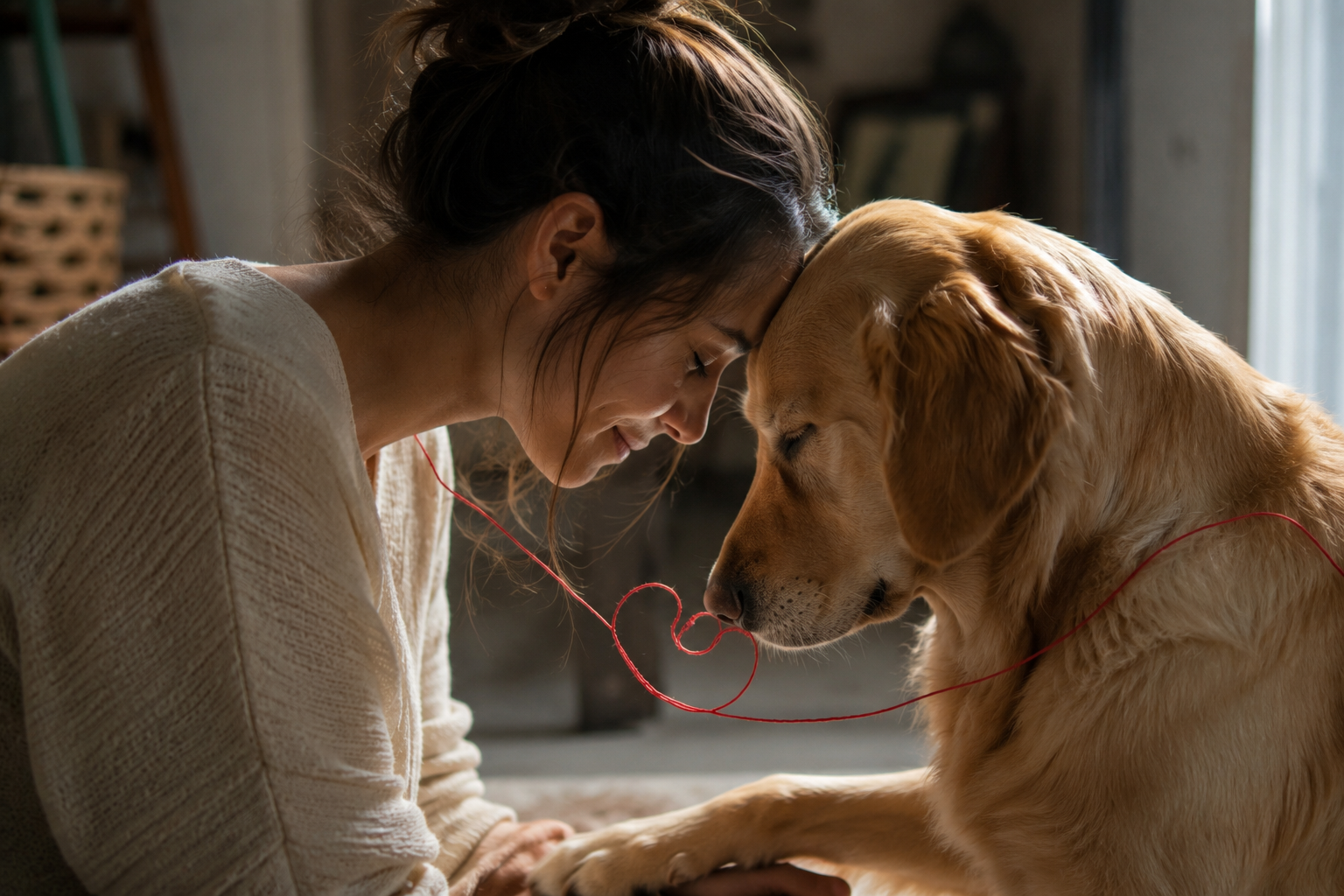
Science has long confirmed what pet owners have always known in their hearts: animals make us better. They lower our blood pressure, ease our anxiety, and shorten the long silences of loneliness. But there is a layer to this relationship that goes deeper than comfort.
There is something ancient and sacred in the bond between humans and animals — a thread that has run through our entire existence as a species.
Read More
Science has long confirmed what pet owners have always known in their hearts: animals make us better. They lower our blood pressure, ease our anxiety, and shorten the long silences of loneliness. But there is a layer to this relationship that goes deeper than comfort. There is something ancient and sacred in the bond between humans and animals — a thread that has run through our entire existence as a species.
A Partnership Tens of Thousands of Years Old
Long before cities, before agriculture, before written language — there were humans and dogs, walking together. Archaeologists have found burial sites where humans were interred beside their animal companions, hand resting on fur, side by side in death as in life. This is not coincidence. This is testament.
We did not domesticate animals simply because they were useful. We domesticated them because something in us recognized something in them — a warmth, a loyalty, a willingness to be present with us in the hardest moments of our days. And they, for their part, chose us too.
What Animals Do to the Human Nervous System
The research is remarkable. Studies consistently show that spending as little as ten minutes with an animal reduces cortisol — the body's primary stress hormone — by measurable amounts. Oxytocin, the neurochemical associated with love and bonding, rises in both human and animal during positive interaction. The effect is mutual, bidirectional, and deeply biological.
I have seen this play out in my clinic more times than I can count. A child terrified of needles who calms completely when a therapy dog enters the room. An elderly patient in emotional distress who softens visibly the moment they hold their pet again after an illness. The animal doesn't analyze the situation or offer advice. It simply arrives — and that arrival is medicine.
Mirroring Our Inner World
One of the most extraordinary things I've observed over decades of practice is how closely animals reflect the emotional states of the humans they live with. Anxious owners tend to have anxious pets. Calm, grounded households produce calm, grounded animals. This is not mystical — it is physiological. Animals are extraordinarily sensitive to our microexpressions, our breathing patterns, our posture and tone.
This mirroring also works in our favor. When we learn to regulate our own energy — to slow down, to soften, to be present — our animals respond. And in responding, they give us feedback that no human relationship can quite replicate: honest, immediate, and entirely without judgment.
The Lesson of Unconditional Love
Perhaps the most profound gift animals offer is this: they love us without conditions. Not because of our success or our status or the way we present ourselves to the world. They love the person who walks through the door — tired, imperfect, still carrying the weight of the day. And in being loved that way, we are reminded of our own capacity to love others the same way.
I believe that the relationship between humans and animals is one of the great civilizing forces in our history. It has made us more empathetic, more responsible, more attuned to a world beyond our own desires. And as we face a future of increasing disconnection and complexity, that thread — ancient, quiet, and unbreakable — may matter more than ever.
Collapse